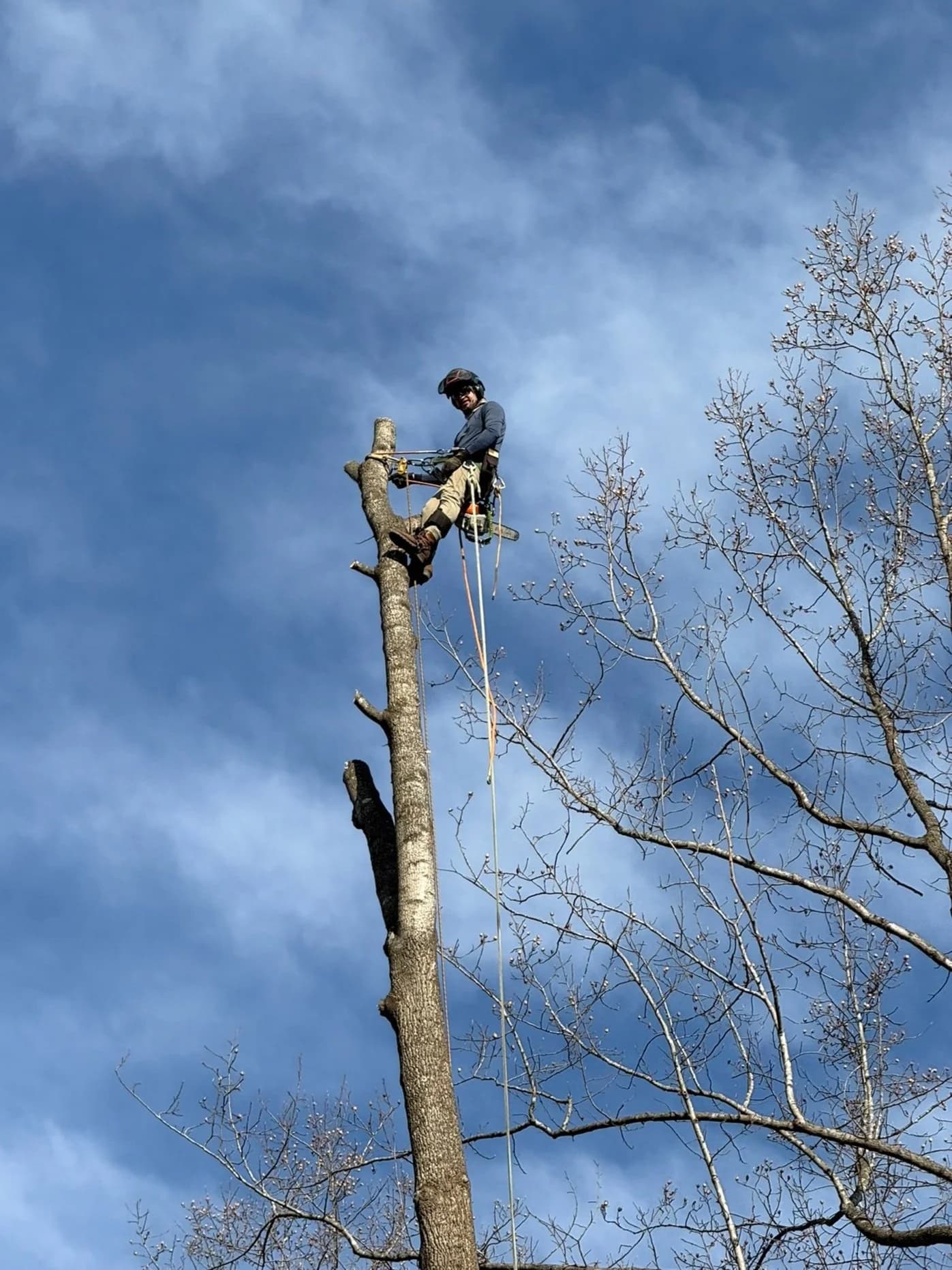
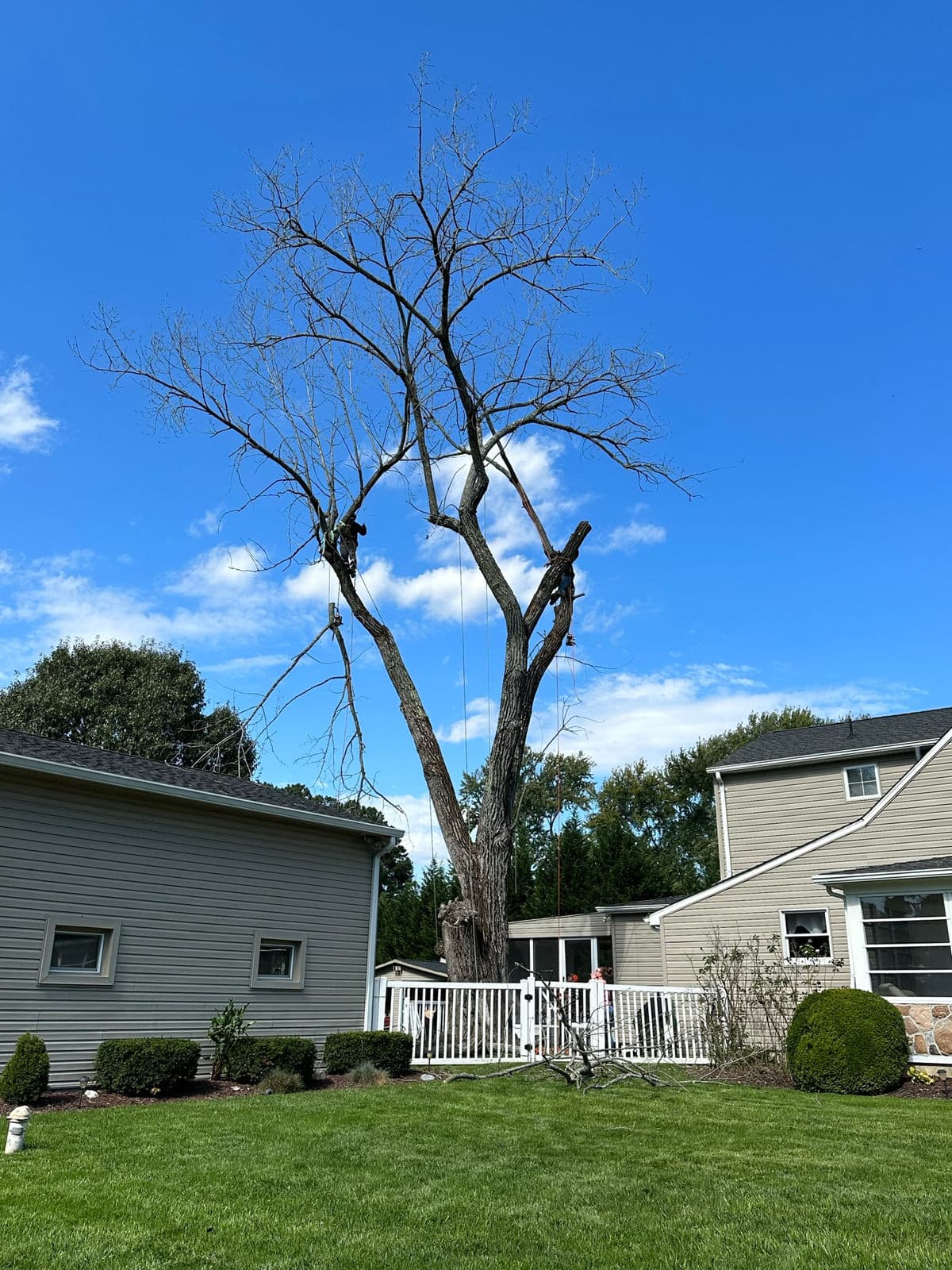
Hazardous removals are planned around the tree’s condition, not just its size, and are usually taken down in small sections with each piece controlled to the ground.
Assessing risk before work begins
We look at what the tree would hit if it or a part of it failed, how sound the wood is where we would climb or attach rigging, and whether the lean, cracks or decay change how the tree should be taken down.
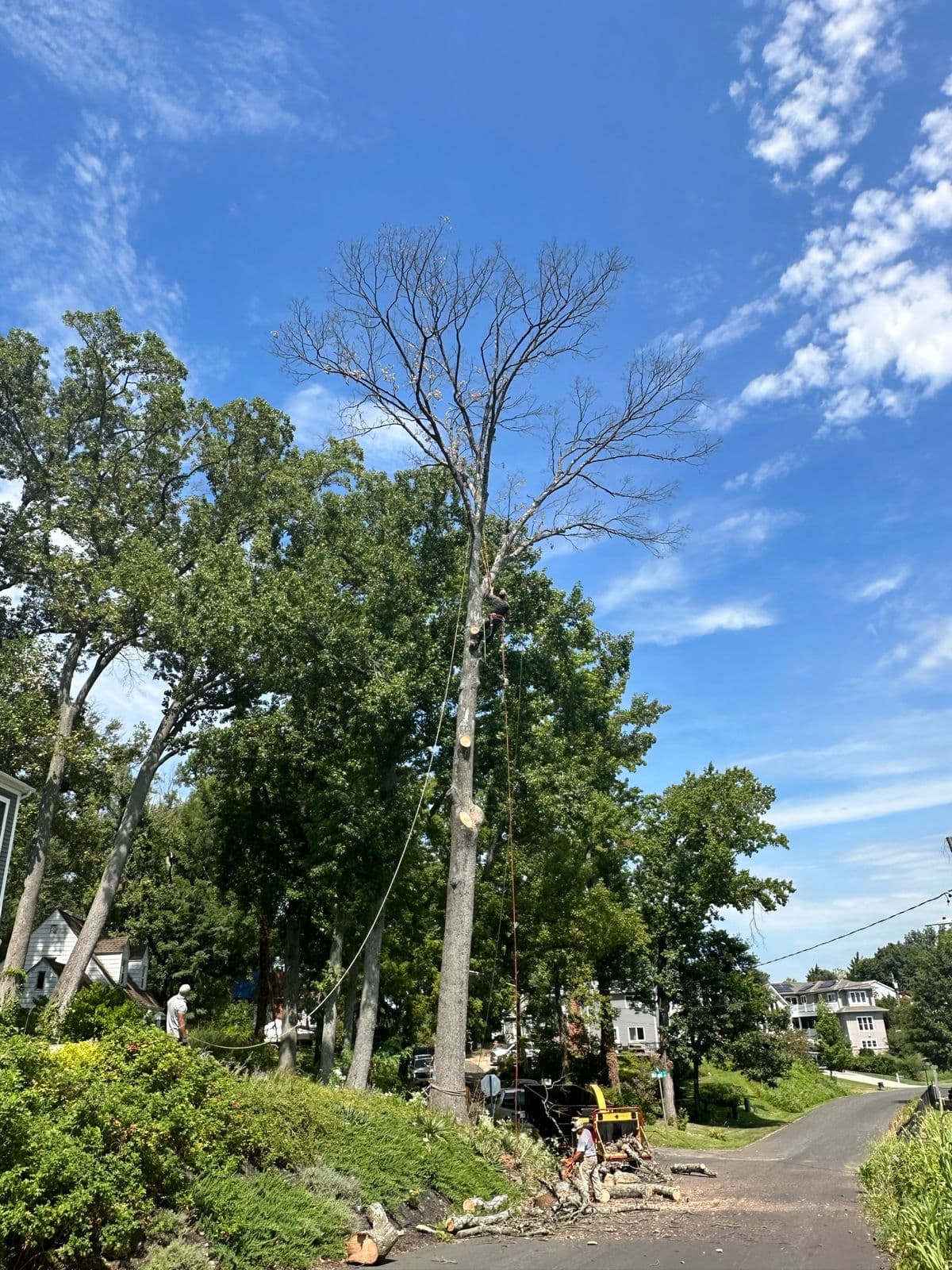
Dead trees standing close to homes, like the one in the photograph on this page, often cannot be safely climbed all the way. In those cases a bucket truck or additional rigging is used so the crew is not relying on rotten wood.
When people call us
- Standing dead trees close to houses, sheds or neighbors’ property
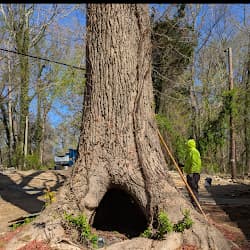
- Trees with hollow or decayed trunks or fungus at the base
- Trees leaning over roofs, roads or docks
- Split or co-dominant trunks that are separating
- Trees in confined spaces between homes with little or no drop zone
What's included
- Risk review of tree condition, targets and access
- Bucket truck or climbing with additional rigging as needed
- Sectional removal with controlled lowering
- Protection of structures, landscaping and hardscape
- Full cleanup and optional stump grinding
Practical considerations
Do not wait on obvious signs
Dead trees become more brittle each season, which makes removal harder and riskier over time. Acting sooner is usually safer and simpler.
Neighboring property
If a hazardous tree is on a property line or a neighbor’s land, it helps to agree access and responsibility before work is scheduled.
Waterfront lots
Trees close to tidal water may fall within the Chesapeake Bay Critical Area. Check with Anne Arundel County about any review or replanting requirements.
How the work goes
- 1
Risk review
We assess the tree’s condition and everything around it.
- 2
Plan & estimate
You get a removal method and a clear written scope.
- 3
Controlled removal
The tree is taken down in sections with rigging.
- 4
Cleanup
Wood and brush are cleared and the site is tidied.
Hazardous Tree Removal questions
What makes a tree hazardous?
A tree is hazardous when it has a defect that makes failure likely, such as decay, cracks or a dead crown, and there is something valuable it could hit, such as a home, a road or a place people gather.
How is a dead tree removed safely?
Dead wood can be brittle, so crews avoid relying on it for climbing or rigging. A bucket truck or extra rigging points are often used and the tree is taken down in smaller pieces.
Is hazardous tree removal more expensive?
It can be, because it often takes more time, equipment and rigging than removing a sound tree of the same size. We explain what drives the price in the estimate.