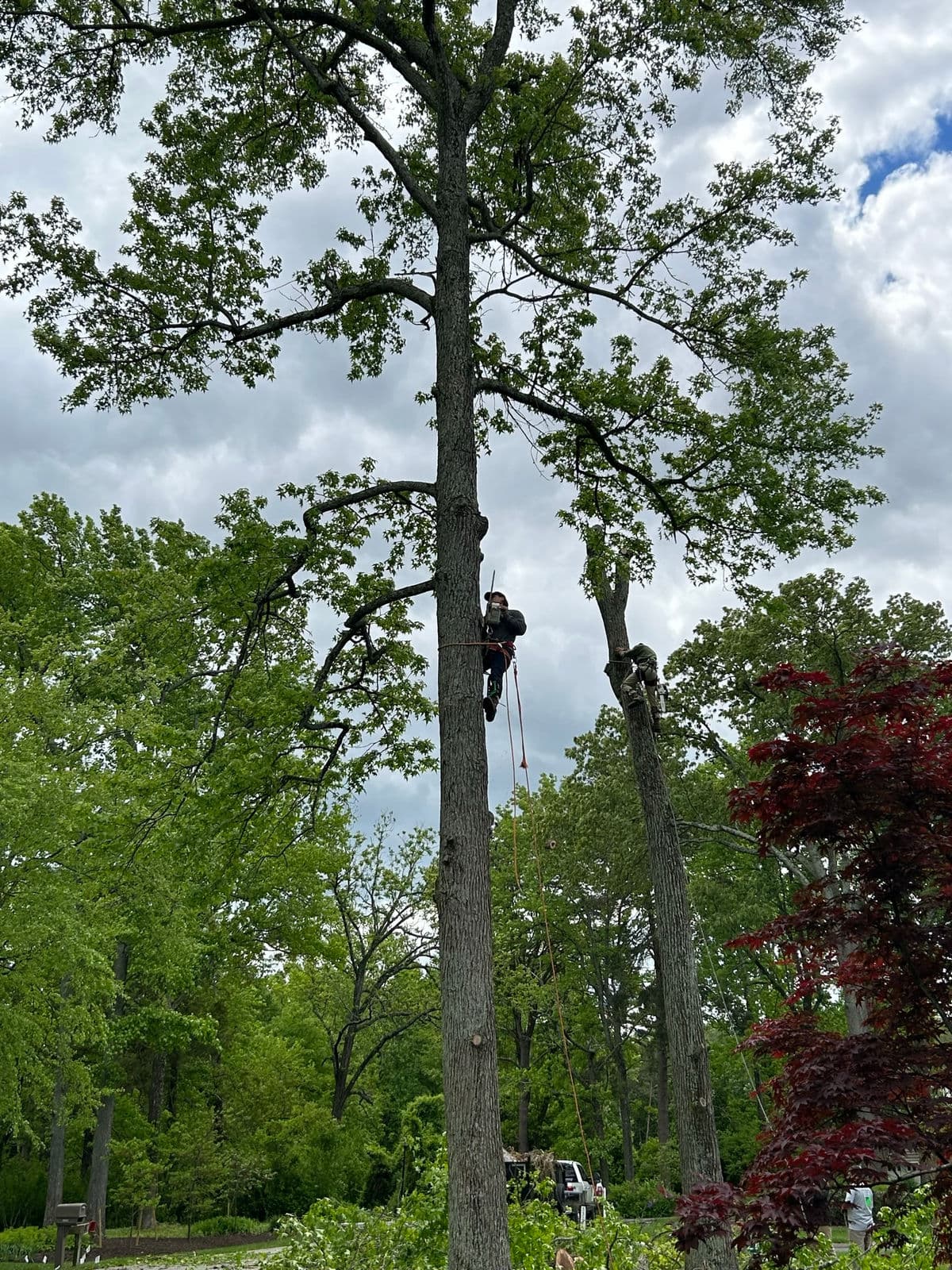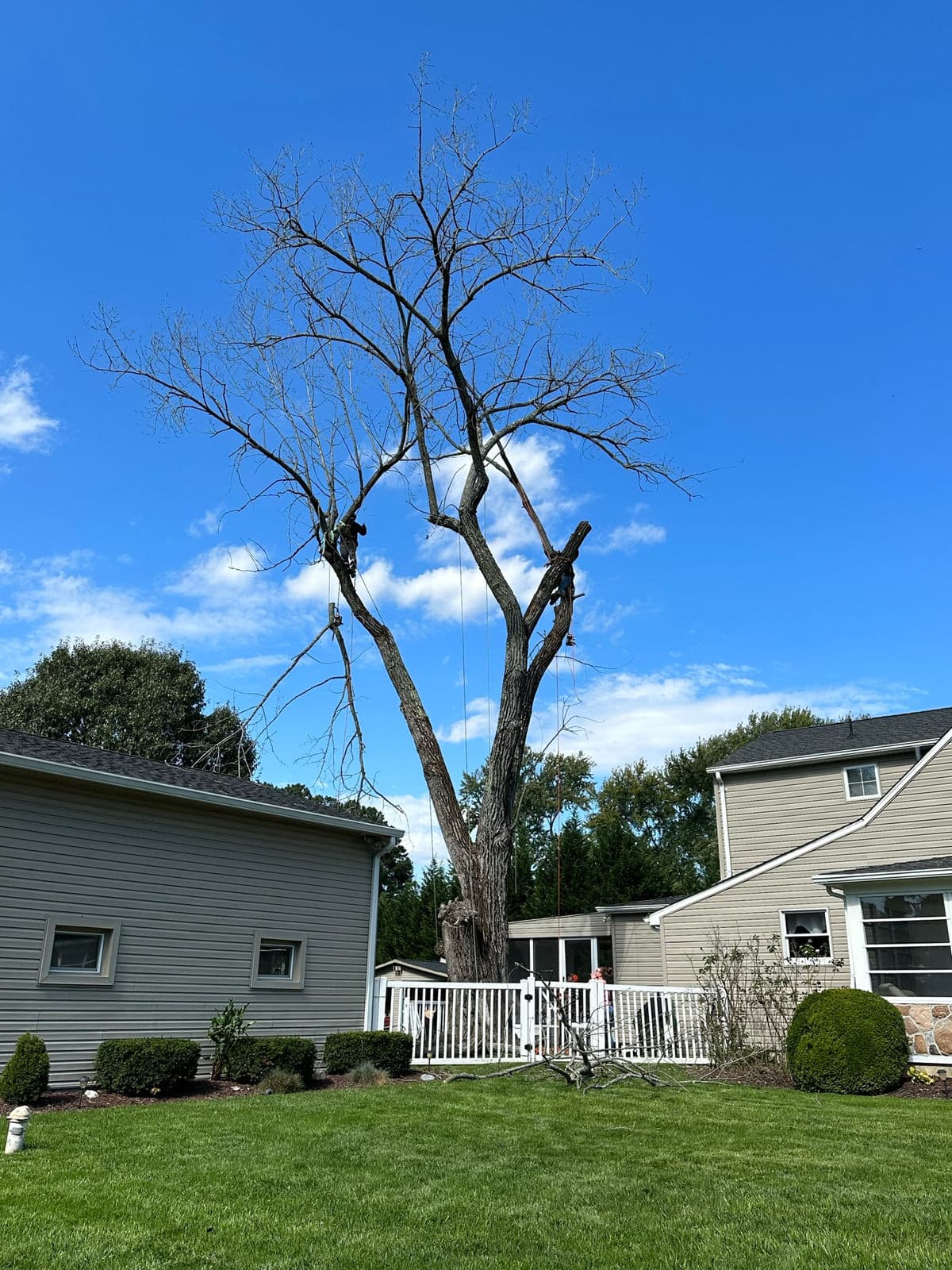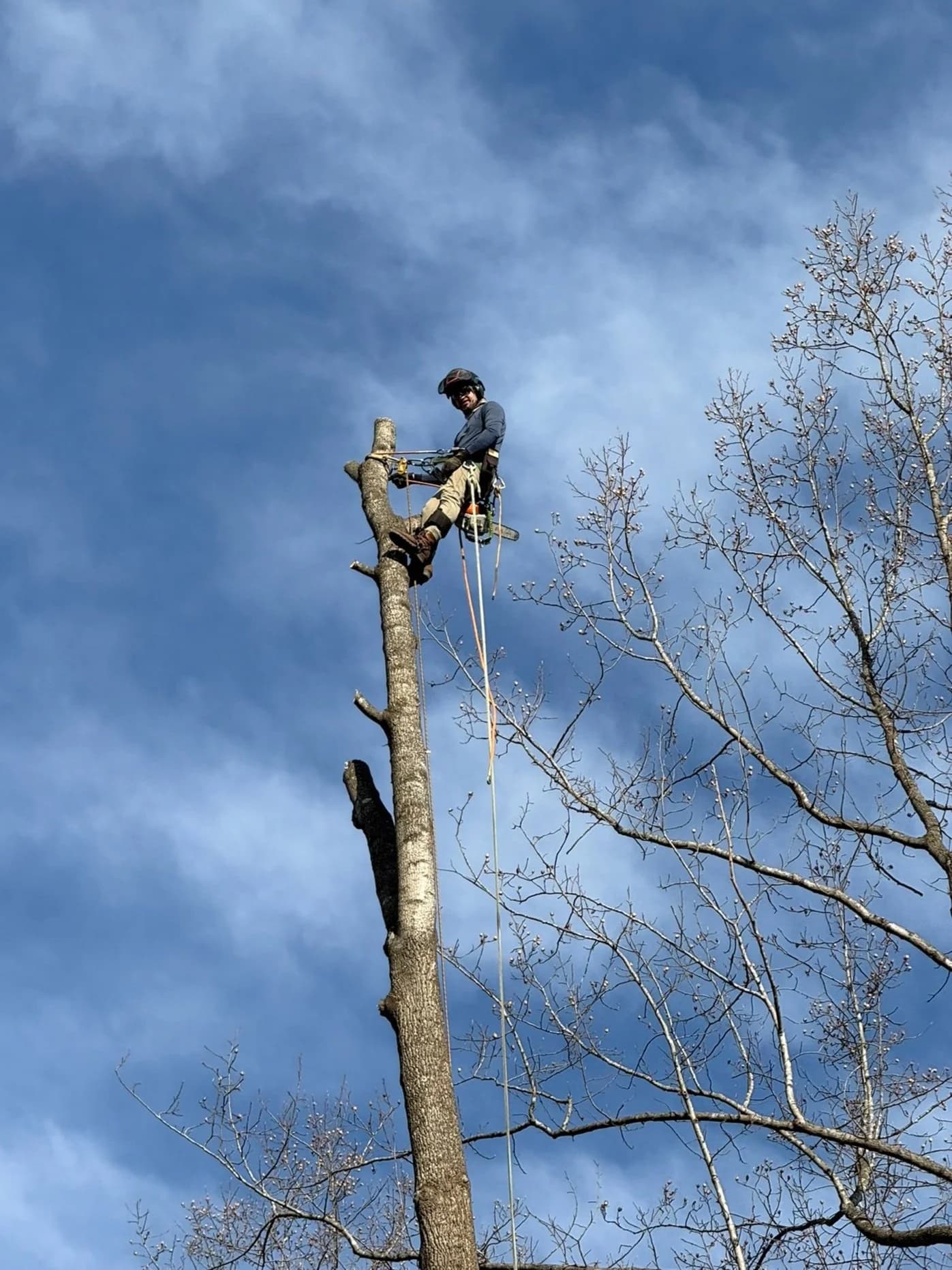
A tree health assessment is an on-site look at that tree so you can make an informed decision: leave it, prune it, keep an eye on it or remove it.
What we look at
We check the canopy for dieback and dead limbs, the trunk for cracks, cavities and fungus, and the base and root area for decay, soil heave or damage from construction.
We also consider the tree’s surroundings: how close it is to the house, whether the area is used often and how exposed it is to wind. A defect in a tree in the woods may be acceptable; the same defect over a bedroom often is not.
When people call us
- A large limb has fallen from an otherwise healthy-looking tree
- Leaves are thinning, browning or dropping early
- Mushrooms or conks are growing on the trunk or roots
- A cavity or hollow has appeared in the trunk
- Construction, grading or trenching has happened near the roots
What's included
- Visual inspection of crown, trunk and root zone
- Plain-language explanation of what we found
- Recommendation: no action, pruning, monitoring or removal
- Estimate for any recommended work
Practical considerations
What a visual assessment can and cannot tell you
A careful visual inspection catches most common problems. Internal decay is not always visible from the outside. If a tree is high-value and the risk is unclear, we will say so.
Hollow is not always hazardous
Some trees live for decades with cavities. Whether a hollow tree is dangerous depends on how much sound wood remains and what is around it.
How the work goes
- 1
Tell us your concern
Let us know what you have noticed and when it started.
- 2
Inspection
We look at the tree and its surroundings on site.
- 3
Recommendation
We explain the options honestly, including doing nothing.
- 4
Next steps
If work is needed, you receive a clear estimate.
Tree Health Assessment questions
How can I tell if my tree is dying?
Look for large dead branches, bark falling away, fungus at the base, little or no leaf-out in spring and leaves browning out of season. One sign alone is not conclusive, but several together are worth having checked.
Can a damaged tree be saved?
Often it can. Trees with limited limb damage or minor decay may be kept with pruning and monitoring. Trees with major structural defects near homes are usually better removed.